Why Does Whipped Cream Melt? How to Keep Cream Stable in Indian Weather
You pipe a row of perfect rosettes, step away to find the box, and come back to find them drooping. Ten minutes later, there’s a little puddle forming at the base of the cake. If you bake anywhere in India between March and October, you’ve almost certainly been there.
Whipped cream is one of the most loved finishes on Indian cakes, but it’s also one of the most temperamental. The good news is that it doesn’t melt at random. Once you understand what’s actually happening inside the cream, it becomes much easier to keep it standing tall, even on a hot, sticky afternoon.
Why Does Whipped Cream Melt?
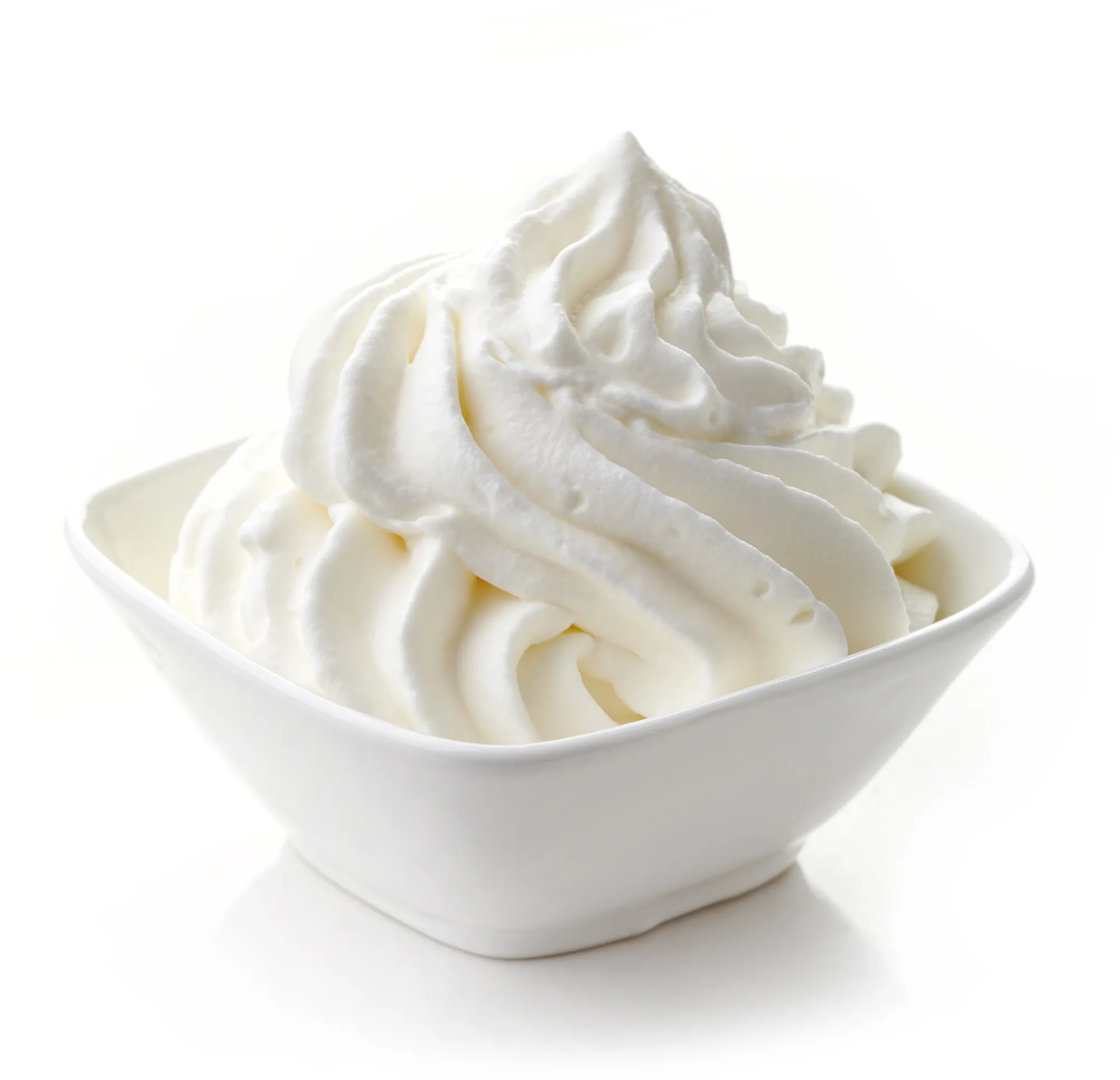
It melts because the fat that holds its structure softens as it warms up, and once it softens, the trapped air escapes and the cream collapses.
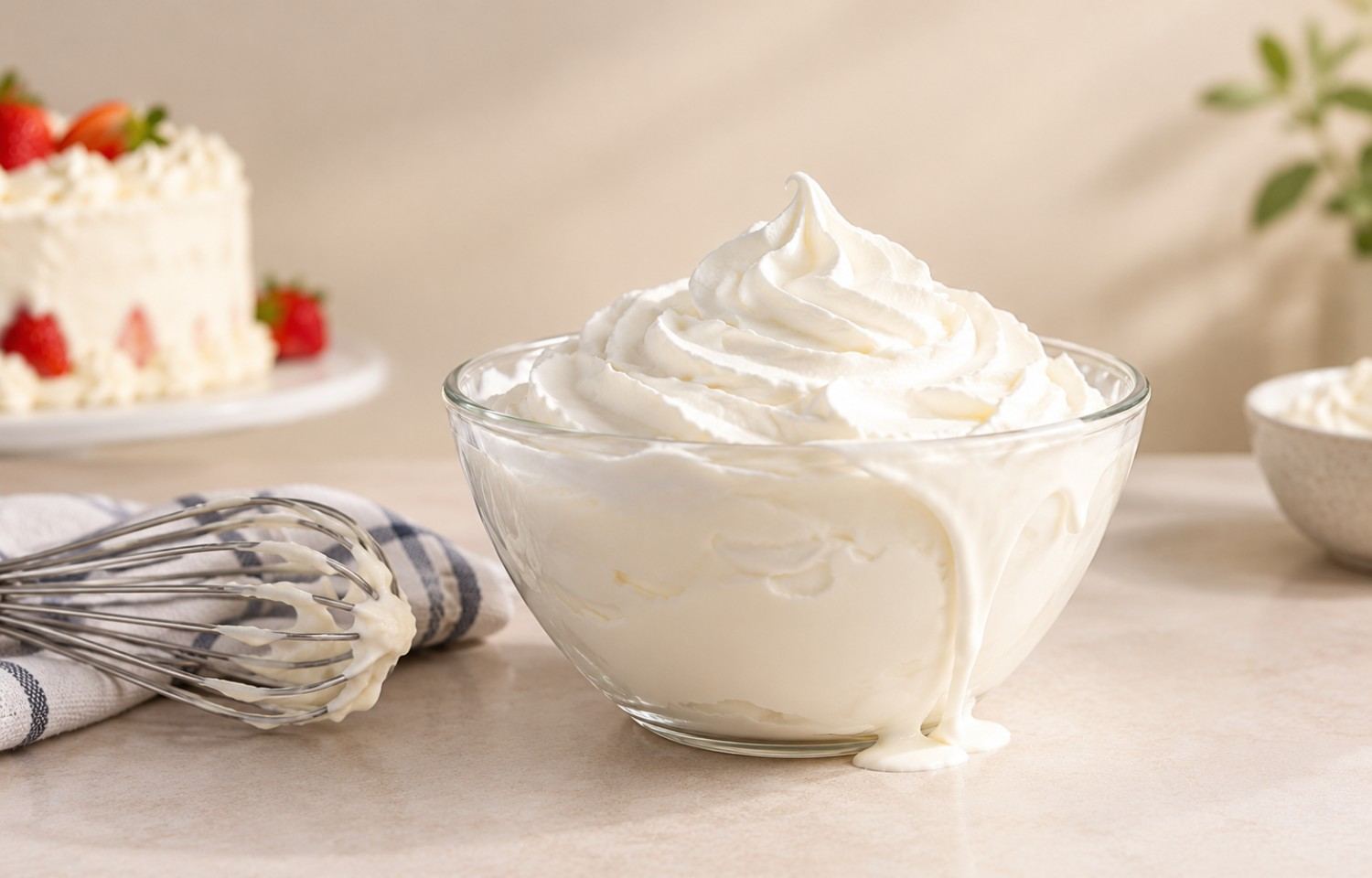
Here’s what’s going on. When you whip cream, you’re beating air into it. The tiny fat globules in the cream line up around those air bubbles and link together, a bit like a net. That net is what turns liquid cream into a soft, stable foam.
The catch is that the net only works while the fat is cold and fairly solid. As the cream warms up, the fat softens, the net loosens, and the air starts to leak out. You see that as drooping piping, a cake that looks “wet”, or liquid pooling at the bottom.
That’s also why the fat content matters so much. Cream needs plenty of fat to build a strong foam in the first place. King Arthur Baking notes that whipping cream with around 30 to 35% fat, or heavy cream with at least 36%, is needed for a sturdy result. Lower-fat creams simply don’t have enough fat to hold the air.
Why Indian Weather Makes It Harder
In much of India, the problem isn’t one hot day. It’s months of heat, often with high humidity, in kitchens that don’t always have air-conditioning. Cream starts warming the second it leaves the fridge, and the warmth from your hands, the mixer and the room all add up.
Then there’s the journey. A cake that looks perfect in the bakery has to survive a scooter ride, a car without AC or a long wait in traffic. Humidity doesn’t help either. It makes everything feel softer and stickier, and it slows down how quickly a cold cake firms up again in the fridge.
Fresh Whipped Cream vs Whipped Toppings
Not all cream behaves the same way, and choosing the right type is half the battle.
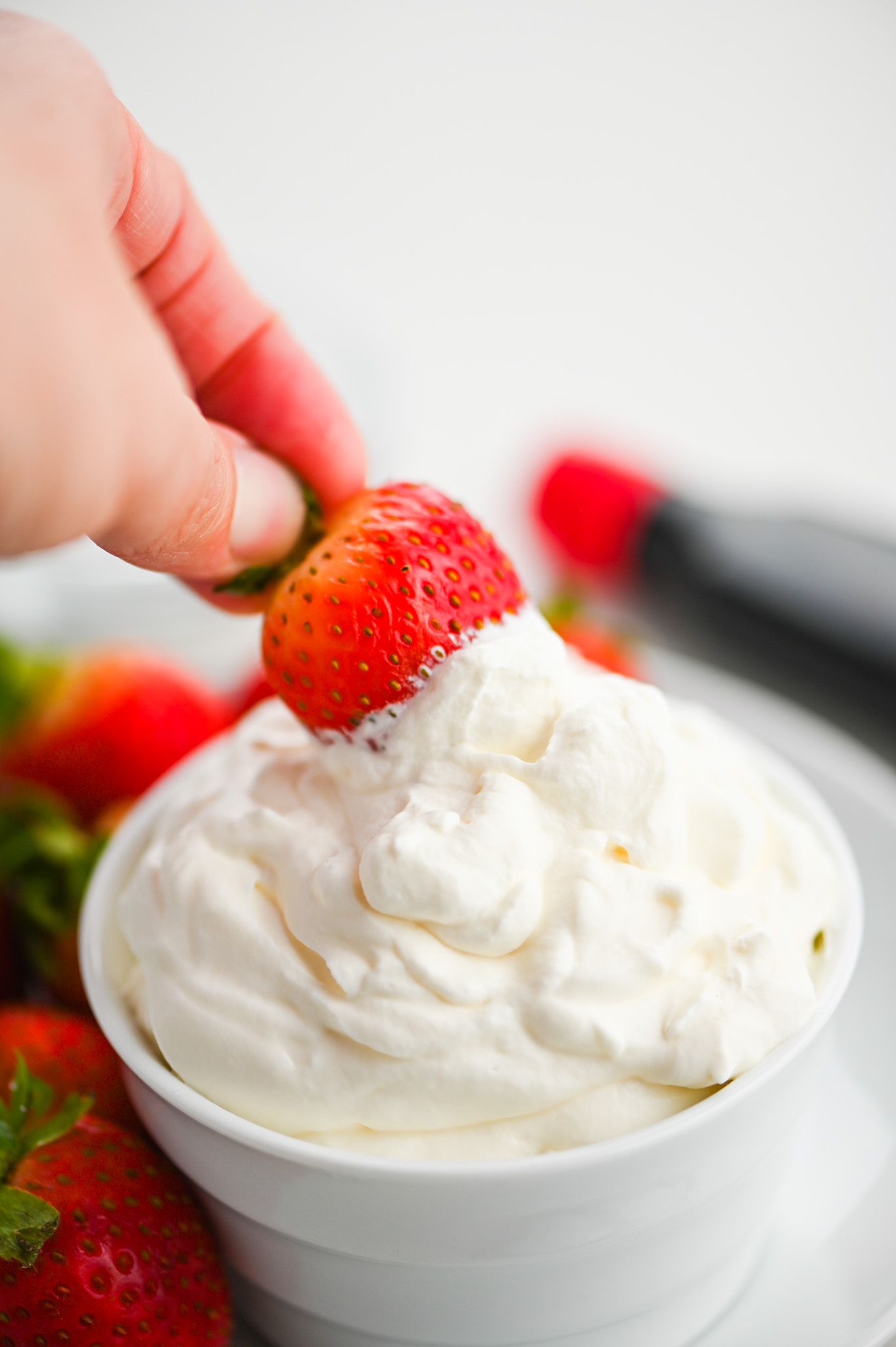
Fresh whipped cream, made from dairy cream, has a lovely clean, milky taste. But because it relies entirely on milk fat, it’s the most sensitive to heat. It’s best for desserts that will be served straight from the fridge, such as mousse, trifles or a cake you’re cutting at home.
Non-dairy whipped toppings are made with vegetable fats and are designed to hold their shape better at higher temperatures. That’s why many bakeries rely on them for cakes that need to be displayed, transported or piped with fine detail.
There’s also a middle ground. Dairy-blend toppings combine some dairy cream with a whipped topping base, which gives a creamier taste with better stability than pure dairy cream.
If you’d like a deeper comparison, our guide to the difference between whipping cream and fresh cream explains each one in more detail.
Choosing the Right Cream for Hot Weather
Rich’s whipping cream range was developed with Indian kitchens in mind, so it covers all three styles. For everyday cakes in warm conditions, toppings like Rich’s Sunwhip and Rich’s New Star Whip are made to stay stable in both A/C and non-A/C kitchens. Rich’s Whip Topping Gold is designed to hold piped rosettes, shells and dollops.
If you want a dairy taste with more structure, Niagara Farms Gold is a dairy-blend topping. And for desserts where real dairy flavour matters most, Rich’s Wilber Farms is a 35% milk fat dairy whipping cream, which is best kept cold and served chilled.
You can browse the full Rich’s whipping cream range on our whipping creams page.
How to Keep Whipped Cream Stable: Practical Tips
Keep Everything Cold
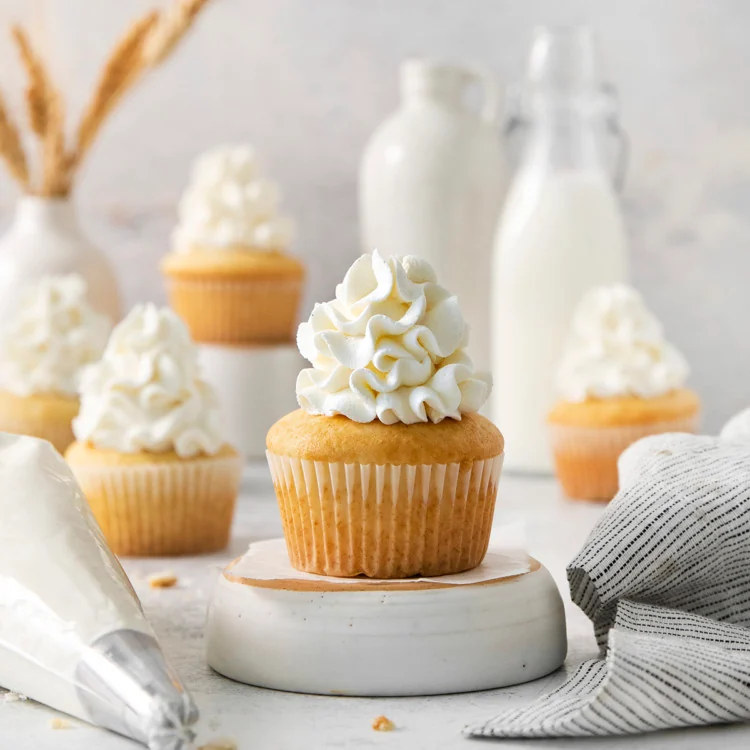
This is the single most important habit. Chill the cream, the bowl and the whisk or beaters before you start. In a hot kitchen, some bakers even set the bowl over a larger bowl of ice while whipping. The colder the fat stays, the stronger the foam.
Thaw Frozen Toppings Properly
Many whipped toppings are stored frozen. Thaw them in the fridge, not on the counter. For Rich’s frozen toppings, we recommend thawing at 2 to 7°C for 24 to 36 hours before whipping. Cream that’s thawed too quickly, or that’s partly frozen, won’t whip evenly.
Don’t Overfill the Bowl
Cream needs room to grow as you whip it. For Rich’s whipped toppings, we suggest the cream should take up no more than about 18% of the bowl’s capacity before you start. An overfilled bowl whips unevenly and warms up faster.
Stop at the Right Point
For piping, you want firm peaks that hold their shape. Keep going past that and the cream turns grainy, starts to lose air and can eventually separate into butter. Our guide on how to whip cream perfectly shows what each stage looks like.
Add a Stabiliser to Dairy Cream
If you’re using fresh whipped cream and need it to hold up longer, a stabiliser helps. In King Arthur Baking’s tests, plain whipped cream turned completely liquid after a few days in the fridge, while cream stabilised with mascarpone or crème fraîche held most of its volume. Plain yogurt also worked, although it deflated a little more. A small amount of dissolved gelatine is another common option for cakes that need to sit for a while.
Chill the Cake Between Steps
Crumb coat, chill. Final coat, chill. Pipe, chill. Short stints in the fridge between stages keep the cream firm and make the next layer much easier to apply.
Work Quickly and Keep Cream Out of Your Hands
Your hands are warm, and so is a piping bag you’ve been holding for ten minutes. Fill the bag only halfway, and swap to a fresh, cold batch rather than squeezing the last warm bit out of the old one.
Using a Whipped Cream Maker
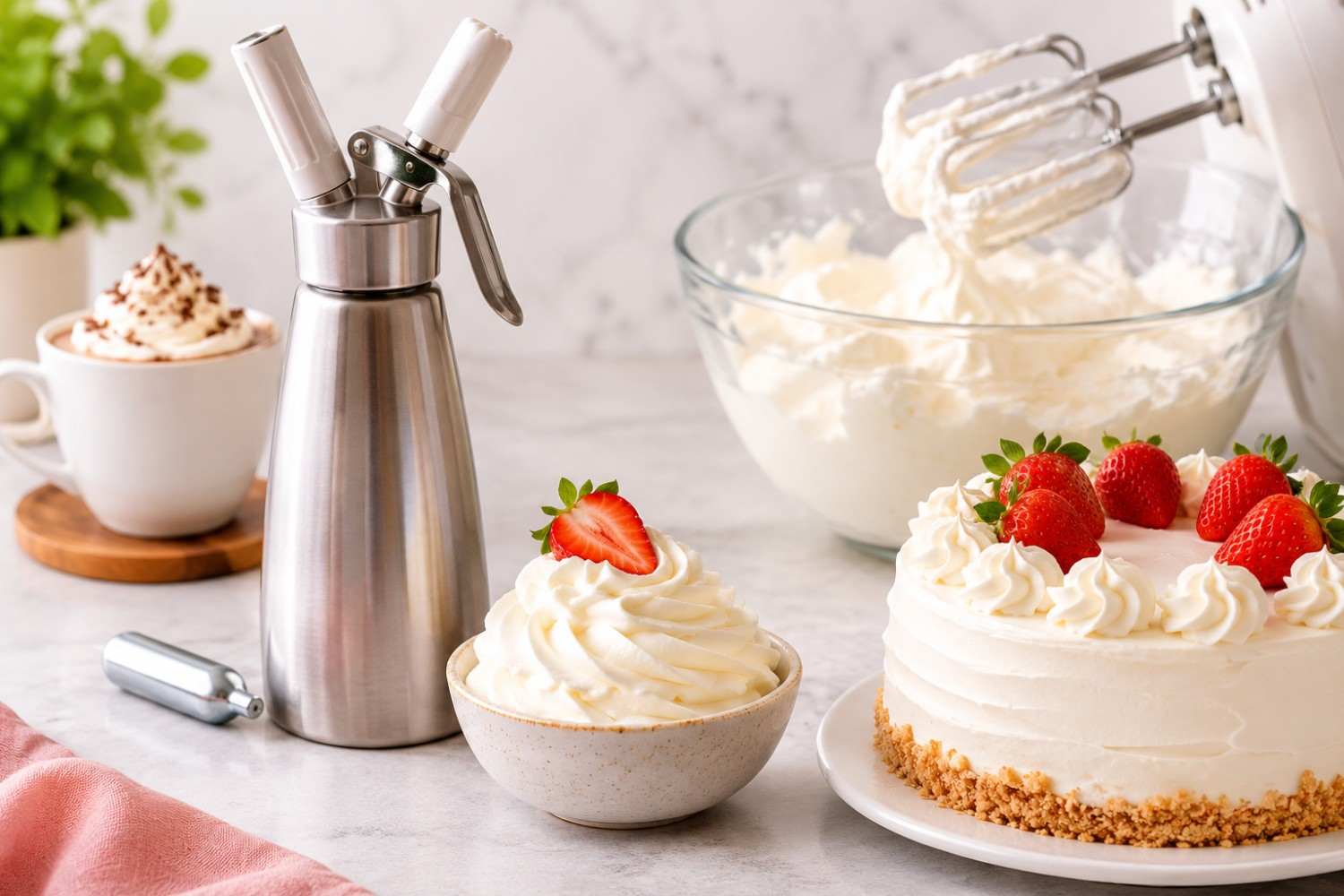
A whipped cream maker, sometimes called a cream whipper or siphon, uses a small gas charger to aerate cream instantly. It’s handy for topping hot chocolate, coffee or a quick dessert, and it gives a very light, smooth texture.
The trade-off is that cream from a whipped cream maker is usually softer and less dense than cream whipped in a bowl. That makes it lovely to eat straight away but less suitable for piping detailed decorations on a cake that has to sit out or travel. For cakes, a stand mixer or hand mixer gives you more control over how firm the cream gets.
Storing and Transporting Cream Cakes
Keep finished cakes refrigerated until the last possible moment, ideally in a closed box so they don’t pick up other smells. If a cake has to travel, chill it well first so the cream is as firm as possible, keep the car or vehicle cool, and place the box on a flat surface rather than a seat.
For bakeries, a short note on the box asking customers to refrigerate the cake as soon as they get home can save a lot of disappointment. Most are best eaten within two to three days.
Frequently Asked Questions
- Why does my whipped cream go watery after a few hours?
That’s the fat warming up. Once it softens, it can’t hold the air any more, so the bubbles escape and liquid starts seeping out. Bakers call this “weeping”. Keeping the cream cold helps a lot, and if you’re using fresh dairy cream, a stabiliser like mascarpone will help it last longer. - Can I save whipped cream that’s started to melt?
Often, yes. If it’s just gone a bit soft, pop it back in the fridge for 15 to 20 minutes and give it a gentle whisk. It should firm up again. If it has completely split and looks curdled, though, it’s quicker to start a fresh batch than to try to rescue it. - Is non-dairy whipped topping better in summer?
For most bakery cakes, yes. If a cake is going to sit in a display, travel across town or carry fine piped details, a non-dairy topping holds up far better in the heat. Fresh dairy cream is still lovely, but it’s happiest on desserts that go straight from the fridge to the table. - Will adding sugar make my whipped cream less stable?
A little sugar is fine. It sweetens the cream without causing problems. The trouble starts when you add too much, because the cream turns heavy and loses some of its airiness. If you’re also using a stabiliser, go easy on the sugar: King Arthur Baking found that too much can make stabilised cream curdle. - How long can a cream cake sit outside the fridge in summer?
Honestly, as little time as you can manage. On a hot day, keep it in the fridge until just before you cut it, and put any leftovers back straight away. - Do I need an electric mixer to whip cream?
Not at all. A balloon whisk and a well-chilled bowl will get you there. It takes a bit of arm work, but for a small batch of fresh whipped cream it’s perfectly doable, and some people find it easier to stop at exactly the right point by hand.
Conclusion
Whipped cream doesn’t melt because you’ve done something wrong. It melts because warm fat can’t hold air. Keep things cold, choose the right cream for where the cake is going, and give it the time it needs in the fridge, and you’ll find that even an Indian summer is a lot easier to work with.
References & Citations