The Science of Baking: Why Ingredients Behave the Way They Do
Baking can feel like a bit of a mystery. You follow the recipe, you cross your fingers, and sometimes the cake rises like a dream and other times it sulks in the tin. The difference is usually not luck. It is chemistry. Baking is really a series of small reactions happening in a warm box, and once you understand them, so much of the guesswork disappears.
Here is a comforting thought: you do not need a laboratory to grasp this. The core ideas behind baking science are simple, and knowing them helps you fix problems, adapt recipes and understand exactly why a step matters instead of just following it blindly.
At Rich’s, we work with bakeries every day, and the ones who get the most consistent results are almost always the ones who understand what their ingredients are doing. So let us walk through the science of baking, ingredient by ingredient, in plain language.
What Is the Science of Baking, and Why Does It Matter?
At its heart, the science of baking is about how a handful of ingredients transform under heat, moisture and mixing into something completely different. Flour, sugar, eggs, fat and a raising agent go in soft and wet, and come out risen, set and golden. Each ingredient plays a specific role, and they all interact.
Why does this matter for you? Because when you know the role of each ingredient, you can troubleshoot with confidence. A dense cake, a spreading cookie, a sunken sponge, each has a cause rooted in baking chemistry, and each has a logical fix. Understanding how baking works turns frustration into control.
How Do the Main Baking Ingredients Behave?
Let us look at the key players. Each of these baking ingredients does a particular job, and the magic is in how they work together.
Flour and Gluten
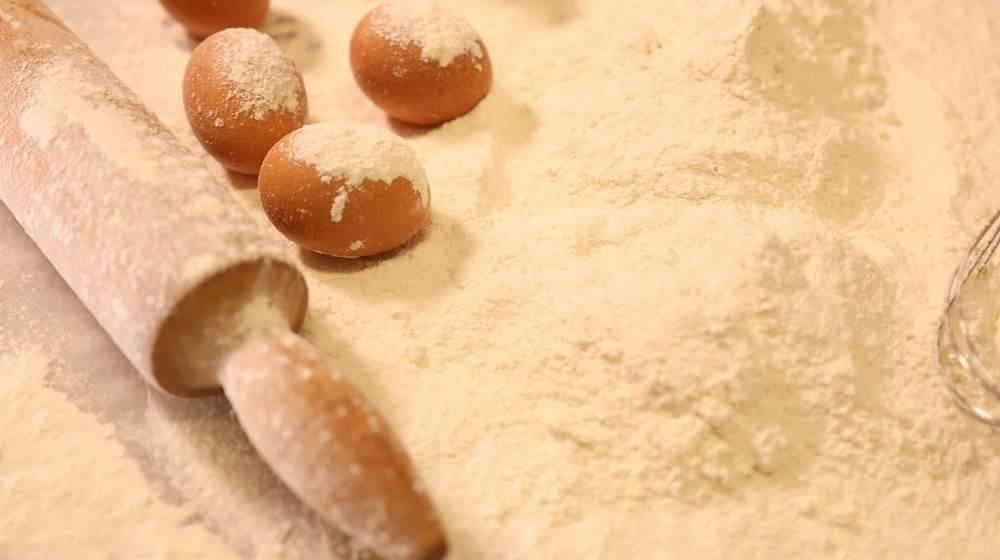
Flour is the skeleton of most bakes. When wheat flour meets liquid and is mixed, two proteins join to form gluten, an elastic network that traps gas and gives structure. A little gluten in a cake keeps it tender; lots of gluten in bread gives that satisfying chew. This is why overmixing a cake batter makes it tough, as you have built too much gluten in baking where you wanted softness.
Sugar
Sugar does far more than sweeten. It holds on to moisture, keeping bakes soft; it helps mixtures brown; and creamed with butter, it traps air that helps a cake rise. Sugar also softens the crumb by slowing gluten formation, which is part of why a low-sugar cake can turn out drier and tougher.
Eggs
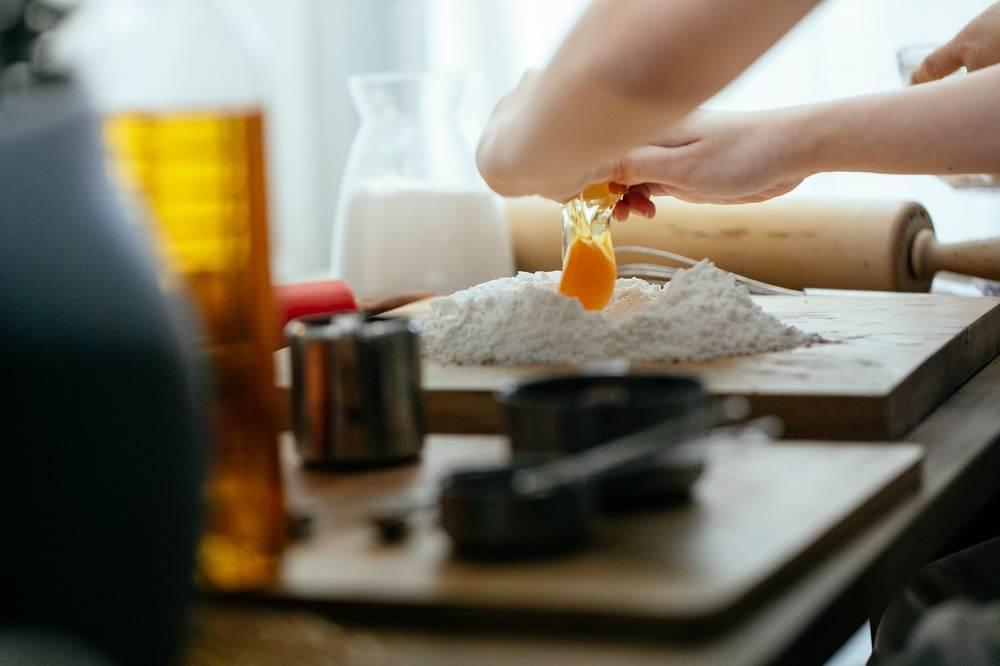
The role of eggs in baking is a big one. Eggs bind ingredients together, add moisture and richness, and help mixtures set as they cook because their proteins firm up with heat. Whisked, egg whites trap air to lighten a sponge; yolks add fat and act as an emulsifier, keeping batters smooth. Few ingredients do so many jobs at once.
Fats: Butter and Oil
Fat brings tenderness, flavour and moisture. Butter creamed with sugar creates tiny air pockets for lift, and because it is solid then melts, it also affects how much a cookie spreads. Fat coats flour proteins, limiting gluten and keeping crumbs short and tender, which is exactly why pastry uses so much of it.
Leavening Agents
Leavening agents are what make bakes rise. Baking soda reacts with acid to release carbon dioxide; baking powder carries its own acid and works with moisture and heat; yeast ferments slowly, producing gas over time. Get the type or amount wrong and you get a flat, dense bake, which is one of the most common raising problems.
What Happens Inside the Oven?
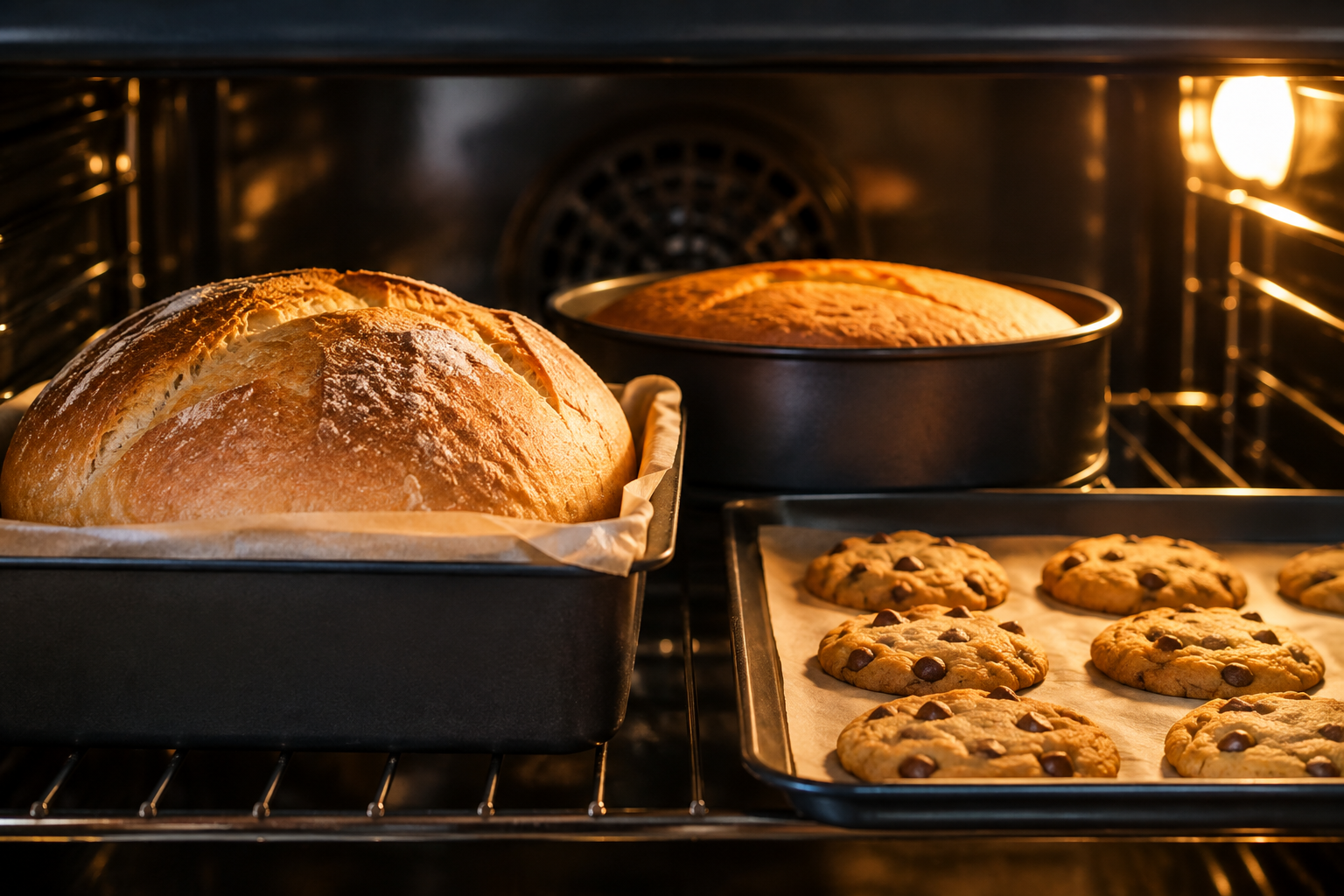
The oven is where the real transformation happens, and several reactions run at once. As the batter heats, gases expand and the mixture rises. Proteins from eggs and flour set, locking in that risen structure so it does not collapse. Water turns to steam, adding extra lift.
Then comes colour and flavour. The Maillard reaction, a reaction between proteins and sugars, is what browns the crust and creates those deep, toasty flavours in bread and cake. Alongside it, caramelisation browns the sugars themselves. Together, the Maillard reaction and caramelisation are why a pale, raw-tasting batter becomes golden and delicious.
Why Does Temperature Matter So Much in Baking?
Temperature controls the timing of every one of these reactions, which is why baking is far fussier about it than cooking. Too low, and the bake dries out before it sets or browns. Too high, and the outside sets and colours before the inside has cooked, giving you a burnt top and a raw middle.
Ingredient temperature matters too. Room-temperature butter creams properly to trap air, while cold butter stays firm for flaky pastry. This is baking science in action, and it is why recipes are so specific about whether things should be cold, warm or at room temperature.
How Does the Science Explain Common Baking Problems?
Almost every baking mishap has a scientific cause. Here is a quick table linking the problem to the chemistry behind it.
| What You See | The Science Behind It | The Fix |
|---|---|---|
| Cake sinks in the middle | Structure set before it was thoroughly baked | Bake fully; do not open the oven early |
| Dense, tough crumb | Too much gluten from overmixing | Mix just until combined |
| Cookies spread too much | Fat too warm, melting before setting | Chill the dough before baking |
| Flat, heavy bake | Weak or expired leavening agents | Use fresh raising agents; measure well |
| Pale, no browning | Not enough heat for the Maillard reaction | Raise the temperature; bake a little longer |
Seen this way, troubleshooting stops being guesswork. Each fault points straight back to a piece of baking chemistry you can adjust.
How Can Understanding Baking Science Make You a Better Baker?
Once you understand why ingredients behave as they do, you stop being a slave to recipes and start being a baker. You can tell why a substitution might fail, adjust a recipe for the humid Indian climate, and diagnose a flop in seconds rather than repeating it.
You also gain the confidence to experiment. Knowing that sugar keeps things moist, or that extra flour builds structure, lets you tweak with purpose. That is the real gift of baking science: not rules to memorise, but understanding that makes every future bake more reliable.
Frequently Asked Questions
1. Why is baking called a science?
Because it relies on precise chemical reactions between ingredients under heat and moisture. Small changes in ratio or temperature change the result, so accuracy matters far more than in everyday cooking.
2. What does gluten do in baking?
Gluten is an elastic network formed when flour meets liquid and is mixed. It traps gas and gives structure. A little keeps cakes tender; a lot gives bread its chew.
3. What is the role of eggs in baking?
Eggs bind ingredients, add moisture and richness, help mixtures set with heat, and trap air to lighten sponges. Yolks also emulsify batters to keep them smooth.
4. What is the difference between baking soda and baking powder?
Both are leavening agents. Baking soda needs an acid to react, while baking powder already contains its acid and works with moisture and heat. Using the wrong one affects rise and taste.
5. What is the Maillard reaction in baking?
The Maillard reaction is a reaction between proteins and sugars under heat that browns the crust and creates deep, toasty flavours. It is why baked goods turn golden and taste richer.
6. Why does temperature matter so much when baking?
Temperature controls when each reaction happens. Too low and bakes dry out before setting; too high and the outside cooks before the inside. Ingredient temperature affects texture too.
7. How does understanding baking science help me?
It lets you troubleshoot faults, adapt recipes to your climate, and substitute ingredients wisely, turning baking from guesswork into something reliable and repeatable.
References & Citations
Serious Eats. The Food Lab: The Science of Baking.
King Arthur Baking Company. Baking Science and Ingredient Guides.
BBC Good Food. The Science of Cake.
Institute of Food Technologists (IFT).